
Fiat currencies
Crypto Currencies
No results for ""
We couldn't find anything matching your search.Try again with a different term.
Crypto Casino Transactions Explained from TXID to Game Balance
 Leo Henry 03-07-2026 09:01:01
 Crypto Casino Transactions Explained from TXID to Game Balance
 A crypto casino payment has two balances in play. One is the coin balance in a wallet. The other is the account balance a platform shows after it recognizes the transfer. Between them sit the asset, the address, the network, the transaction record, and the confirmation process.
That split is easier to understand once a transaction is treated as a record with an input, an output, a digital signature, and an address. An open-access PLOS One article on blockchain smart contract technology describes transactions through sender and receiver details, amounts, signatures, and public key addresses, which is the same mental model a user needs before sending crypto anywhere online.
Where a Transfer Turns into Play
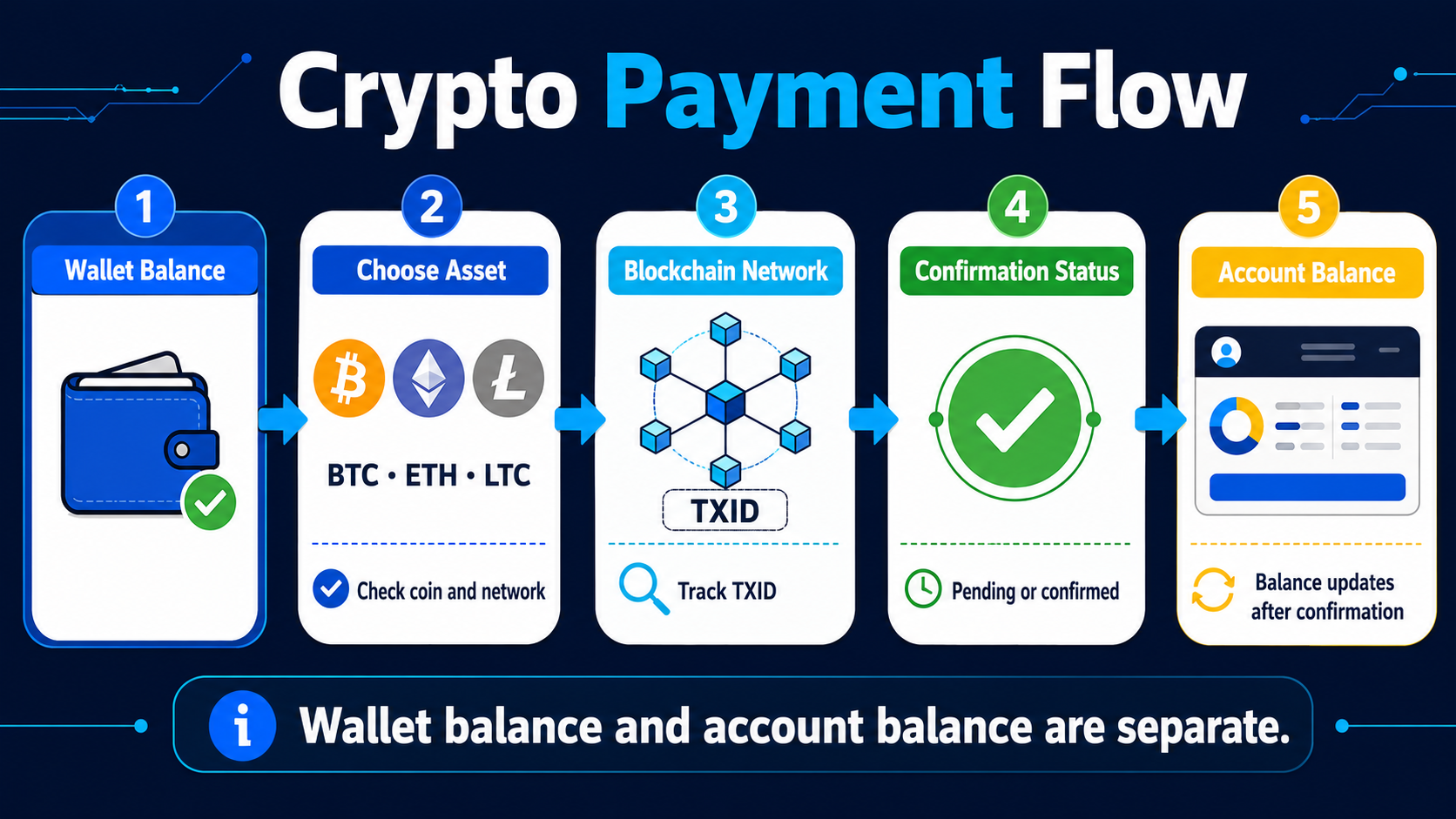
A crypto-supported casino page is easiest to read when the payment layer is separated from the play layer. The payment layer answers the practical questions first: which coin is being used, which network carries it, which address receives it, and what has to happen before the balance appears in the account. The play layer comes after that, when the user chooses between formats such as slots, live casino, poker, sports, or other game types. Keeping those layers separate prevents a common misunderstanding. A wallet may show that a transfer has been sent, but the account balance still depends on the platform recognizing the transaction after the required network checks.
That distinction is visible on Bovada, where the homepage brings sports, casino games, live casino, and poker into one broad entertainment setting, while also referring to multiple deposit and cash-out methods, including crypto options. The useful point is not that crypto changes how any game works. It is that the payment route sits underneath the session before any format is chosen.
Bitcoin, Ethereum, Litecoin, and other supported assets may all appear under the same crypto heading, but each still has its own transfer behavior, fee pattern, confirmation rhythm, and tracking trail. Reading the page this way gives the user a cleaner order of thought: check the asset, check the address, understand the network step, wait for account crediting, then decide what kind of session the balance will be used for.
The same payment-and-play overlap appears in a BovadaHub article on top crypto casino games for the Lunar New Year. It places Bitcoin, Ethereum, and Litecoin beside slot examples, such as Cai Fu Dai Panda, Yin Yang Twins, Phở Sho, Da Hong Bao, and Nine Tailed Fortune. That makes the payment idea more concrete because the crypto references are not floating on their own. They sit next to ordinary slot vocabulary: reels, lines, wilds, scatters, free spins, and Hold & Win features. For the reader, that is the practical connection. Crypto explains how the balance moves in and out. The game format explains what happens once that balance is available inside the session.
Reading the Deposit Path Without Guesswork
The deposit path starts before anything is sent. A user chooses the coin, copies the platform address, checks the network, then sends from a wallet or exchange account. The address is not a nickname or a general account label. It is the destination for a specific blockchain transfer.
The TXID is the next reference point. Once broadcast, the TXID can show whether the network has seen it, whether it is pending, and whether confirmations have started. This is where new users often misread the timing. A wallet may show that coins have left, while the receiving platform still waits for the confirmation threshold it uses before crediting the account.
That delay does not mean something has gone wrong. It can mean the transfer is still moving through the normal path from broadcast to confirmation to account credit. The cleaner habit is to keep the TXID, avoid resending too quickly, and read the payment wording before assuming the wallet status and the site balance should update at the same second.
Why the Coin Choice Changes the Feel
Crypto payment methods are often reduced to speed, but the better question is familiarity. A Bitcoin user may already understand blocks and confirmations. An Ethereum user may already expect changing network fees. A Litecoin user may prefer a lighter payment rhythm. A stablecoin user may care more about keeping the unit of account steady during the transfer.
None of that turns a casino payment method into a market decision. The coin is simply the route. The game balance is the usable amount once the platform credits the account. The game format follows its own rules. A slot spin, live dealer round, poker hand, and sports selection use the credited balance differently, but the transfer that arrived before them still depends on address accuracy, network choice, and confirmation status.
A Cleaner Mental Model for Crypto Casino Payments
The simplest model is a 3-part path: wallet, network, account. The wallet sends. The network records and confirms. The platform credits. If one part is still pending, the next part may not be visible yet.
That model keeps the experience practical. It replaces vague speed assumptions with checkable details. It also keeps the game choice in its proper place. Crypto explains how the balance moves. The casino format explains how the session feels once the balance is available.
A payment page becomes easier to read when those layers stay separate. The wallet address is the destination, not the account balance. The TXID is the receipt trail, not the playable amount. The credited balance is where the platform side has caught up with the network side. That public trail is also why payment literacy starts with addresses, confirmations, and transaction records, a point made clear by open-access network analysis of Bitcoin transactions.

Most Read News
Trending Coins and Tokens


Related Articles
-
 Bitcoin ETFs Snap Nine-Day Inflow Streak as Ethereum Funds Extend Their Run
 - Japan’s Yen Falls Again Despite $97 Billion Aid. Risk For Bitcoin?
 BeInCrypto 21 mins Ago
 - S&P 500 Is Up 12% in 2026 But a 1907 Crash Signal Is Back BeInCrypto 46 mins Ago
- CEO Jeremy Allaire says Circle built “the platform for the internet financial system”, but cirBTC has only 40 BTC
 CryptoSlate 1 hour Ago
 Bitcoin ETFs Snap Nine-Day Inflow Streak as Ethereum Funds Extend Their Run


 Japan’s Yen Falls Again Despite $97 Billion Aid. Risk For Bitcoin?
  S&P 500 Is Up 12% in 2026 But a 1907 Crash Signal Is Back
  CEO Jeremy Allaire says Circle built “the platform for the internet financial system”, but cirBTC has only 40 BTC